Gondley Consulting
New patient intake checklist: what to collect before the first visit

Ayush Gondley · 14 October 2026 · 7 min read
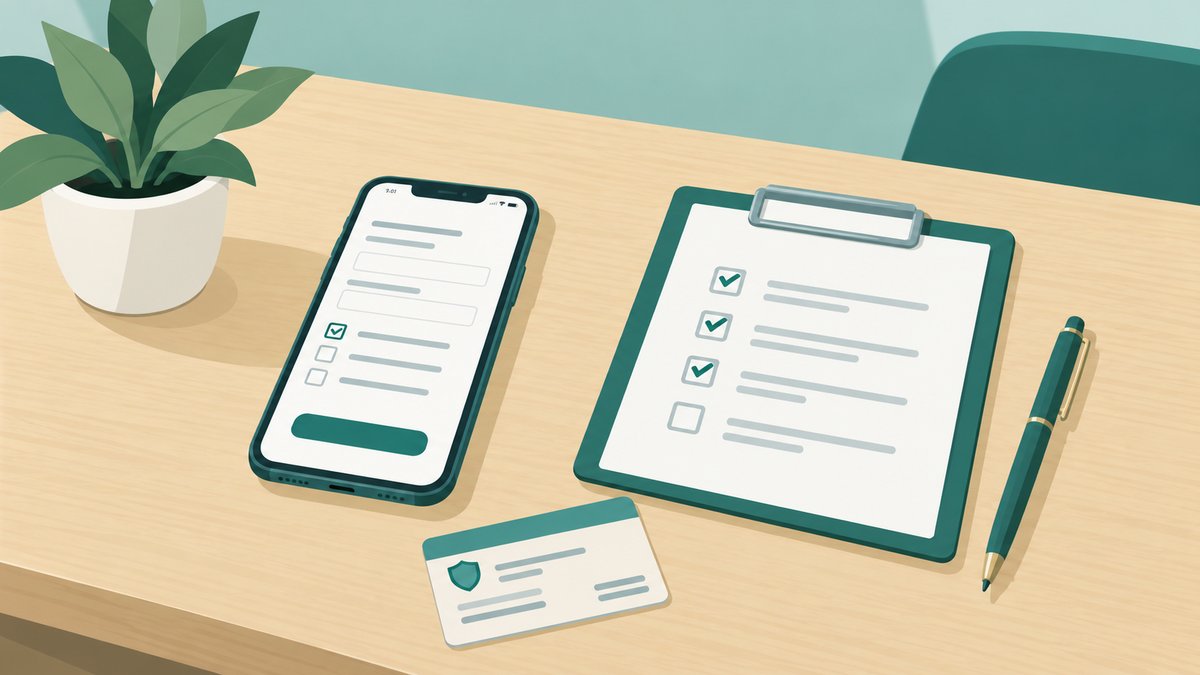
A new patient's forms take ten minutes at home, or twenty at the front desk while the schedule waits.
Key takeaways
- Collect intake before the first visit, not on a clipboard in the waiting room: contact details, insurance or self-pay, history, previous providers and the signed policies.
- HIPAA requires a provider with a direct treatment relationship to give the notice of privacy practices no later than the first service, and to make a good faith effort to get a written acknowledgment of receipt.
- For patients who are uninsured or paying themselves, the No Surprises Act rules require the provider to ask about coverage, tell them a good faith estimate is available, and send it on a set timeline after scheduling.
- Sending the forms, reminding until they are done and flagging gaps can run by themselves. Reviewing what the patient wrote stays with people.
A new patient's first visit often starts late for a reason that has nothing to do with care: the forms. A clipboard handed over at check-in means twenty minutes of handwriting, a missing insurance card and a history the clinician reads for the first time in the room. The same forms, sent when the patient books, can arrive complete before anyone walks in.
What to collect
A starting list. Keep what your practice uses, and send it as one online form or packet when the appointment is booked.
New patient intake · sent at booking, due [2] days before the visit
Every practice
· Full name, date of birth, address, phone and email, and how they prefer to be contacted
· Insurance: a photo of the front and back of the card and the policyholder's details, or that they will pay themselves
· Reason for the visit
· Conditions, current medications and allergies
· Previous providers, with dates, so records can be requested
· Emergency contact
· Signed: acknowledgment of the notice of privacy practices, consent to treatment, your financial policy, your no-show policy, and consent to texts or emails
Therapy practices, also
· Informed consent to therapy, including fees and the limits of confidentiality
· Consent for telehealth, if sessions may be online
· The questionnaires the clinician uses before a first session
Veterinary practices, instead of the patient's history
· Owner's details, and the pet's name, species, breed, age, sex and whether neutered
· Microchip number
· Vaccine records, including the rabies certificate
· The previous clinic, so records can be requested
· Current medications and diet, and anything staff should know when handling the pet
The previous-provider line matters more than it looks: it is what lets the front desk ask for records in time. How to word that request, and what HIPAA allows, is in our records request letter.
What the rules require at intake
The notice of privacy practices
A covered health care provider with a direct treatment relationship must give the patient its notice of privacy practices no later than the date of the first service, and, except in an emergency, make a good faith effort to obtain a written acknowledgment that the patient received it. If the acknowledgment is not obtained, the provider documents its efforts and the reason.1 The notice must also be posted in a clear and prominent place at the office, and available for patients to take with them.2
When the first service is delivered electronically, HHS says the provider must send an electronic notice automatically and at the same time as the patient's first request for service, and make a good faith effort to get a return receipt.1 The notice may be emailed to a patient who agrees to receive it electronically.2
A good faith estimate for self-pay patients
Under the federal rules that carry out the No Surprises Act, the provider who schedules the care must find out whether the patient is uninsured or self-pay, by asking whether they have health coverage and, if they do, whether they want a claim submitted to it. Those patients must be told that a good faith estimate of expected charges is available, both orally when scheduling and in writing on the website and in the office, and any question about cost counts as a request for one.3
The estimate is due:3
- Within 1 business day of scheduling, when the service is booked at least 3 business days ahead.
- Within 3 business days of scheduling, when it is booked at least 10 business days ahead.
- Within 3 business days of the request, when the patient asks for one.
CMS tells patients they may be able to dispute a bill that is at least $400 more than the estimate.4 These rules are about people's own health care, so they do not cover veterinary visits.
Informed consent to therapy
The APA Ethics Code (Standard 10.01) asks psychologists to inform clients, as early as is feasible in the therapeutic relationship, about the nature and anticipated course of therapy, fees, involvement of third parties and limits of confidentiality, and to give them a chance to ask questions.5 The ACA Code of Ethics (A.2.b) asks counselors to explain fees and billing arrangements, including procedures for nonpayment of fees, as part of informed consent.6 Intake is the natural place for both, together with the late-cancellation policy.

Messages you can copy
Replace the words in brackets. Send the form link as soon as the appointment is booked, and stop the reminders once the forms are in.
Forms link · text or email, right after booking
[Practice]: you're booked with [Clinician] on [day, date] at [time]. Please fill in your new patient forms before your visit. It takes about [10] minutes: [link]. Reply STOP to opt out of texts.
Forms not done · text, 2 days before the visit, only if the forms are incomplete
[Practice]: your forms for [day] at [time] aren't finished yet. Please complete them here so we can start on time: [link]. Bring your insurance card and photo ID. Questions? Call [phone].
Self-pay estimate · email, within the timeline above, to patients who are uninsured or paying themselves
Hello [Name], thank you for booking with [Practice] on [date]. As you are paying for this visit yourself, your good faith estimate of the expected charges is attached. If you have any questions about it, reply to this email or call [phone].
Veterinary version · text, right after booking
[Clinic]: [Pet] is booked with [Vet] on [day, date] at [time]. Please fill in [Pet]'s new patient form and upload vaccine records, including the rabies certificate: [link]. Reply STOP to opt out.
Reminders for the visit itself, and what to do when a new patient doesn't arrive, are in our appointment reminder templates and our no-show policy article.
What can run by itself
- The forms link, sent the moment a new patient is booked.
- Reminders that go only to patients whose forms are unfinished, and stop once they are done.
- A list for the front desk each afternoon: tomorrow's new patients, with forms done, forms missing, or no insurance card.
- The records request to the previous provider, started from what the patient wrote on the form.
- The acknowledgment record, kept with the patient's file, including when it was not obtained and why.
What stays with people
- Reading the history. The clinician reviews what the patient wrote, and follows up on anything unclear.
- The estimate. Someone who knows your fees prepares each good faith estimate.
- Patients who can't use a form. A phone call or help at the desk, without making them feel behind.
Count it first
For two weeks, note how many new patients arrive without finished forms, and how many first visits start late because of it. That count is the case for sending forms at booking, and the number to compare afterwards. It is one of the four jobs in our front-desk automation article, and more of what we set up is on our page for practices.
Questions practices ask
Does a patient have to sign the HIPAA notice acknowledgment?
The provider must make a good faith effort to obtain a written acknowledgment that the patient received the notice. If the patient does not sign, the provider documents the effort and the reason it was not obtained.
Can the notice of privacy practices be sent by email?
Yes, to a patient who agrees to receive the notice electronically. It must still be posted at the office and available for patients to take with them.
When is a good faith estimate due?
For uninsured or self-pay patients: within 1 business day of scheduling when the service is at least 3 business days away, within 3 business days of scheduling when it is at least 10 business days away, and within 3 business days of a request.
What should a therapy intake include?
Informed consent to therapy. Under the APA Ethics Code that covers the nature and anticipated course of therapy, fees, involvement of third parties and limits of confidentiality, explained as early as is feasible, with a chance for the client to ask questions.
Sources
- U.S. Department of Health and Human Services, Notice of Privacy Practices for Protected Health Information.
- Code of Federal Regulations, 45 CFR 164.520, paragraphs (c)(2) and (c)(3).
- Code of Federal Regulations, 45 CFR 149.610, Requirements for provision of good faith estimates of expected charges for uninsured (or self-pay) individuals.
- Centers for Medicare & Medicaid Services, Medical bill rights.
- American Psychological Association, Ethical Principles of Psychologists and Code of Conduct (effective 2003, amended 2010 and 2017), Standard 10.01 (Informed Consent to Therapy).
- American Counseling Association, 2014 ACA Code of Ethics (PDF), section A.2.b.
About the author
Ayush Gondley founded Gondley Consulting, which automates front-desk work for small US medical, therapy and veterinary practices. Before that he was a marine engineer at Maersk, keeping complex systems running at sea. Gondley Consulting on LinkedIn