Gondley Consulting
Medical records requests: how a small front desk keeps up without the chasing

Ayush Gondley · 28 September 2026 · 4 min read

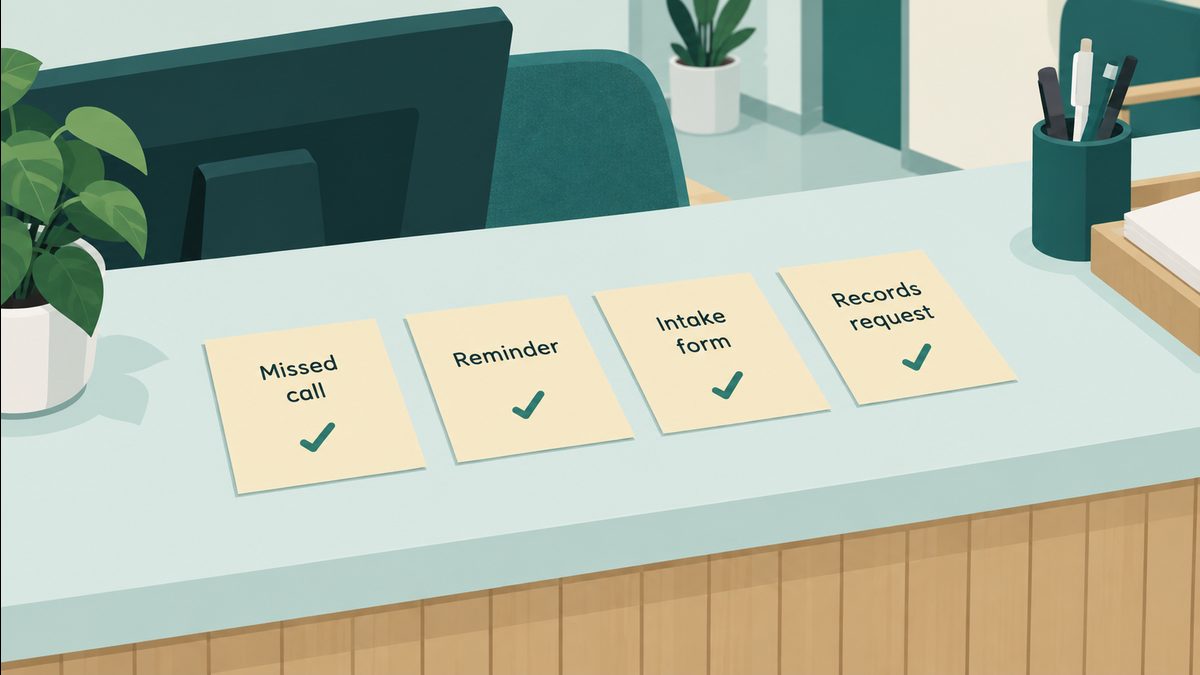
Most of a records request is tracking: logging it, watching the clock, sending it and confirming it arrived.
Key takeaways
- A practice has 30 days to act on a patient's request for their records, with one extension of up to 30 more days if it tells the patient in writing why.
- Most of the work is not finding the records. It is logging the request, watching the clock, sending it the right way and chasing the requests that go the other way.
- Automate the form, the log, the reminders and the follow-ups. Keep people on deciding what to release.
Records requests arrive a few at a time, by phone, fax, email and at the desk, and each one starts a clock. In a practice with one or two people at the front desk, that is how a small job turns into a pile.
Patients look for this constantly. In the US, "medical records request" and "medical records release form" are each searched on Google between 1,000 and 10,000 times a month.2 Behind many of those searches is a patient about to ask a practice for their records, and a front desk that will have to track the request.
What the rule asks of a practice
Under the HIPAA right of access, a practice must:
- Act within 30 days of receiving the request. If it cannot, it may extend once, by no more than 30 days, as long as it tells the patient in writing, within the first 30 days, why and by when.1
- Send the records in the form the patient asks for, electronic included, if it can readily produce them that way.1
- Send them to the person the patient names, such as another doctor, when the patient's request says who and where.1
- Charge only a reasonable, cost-based fee, which may cover only the labor of copying, supplies and postage.1
A practice may ask for requests in writing, as long as it tells patients so.1 And for therapists and psychologists: psychotherapy notes are not part of the right of access.1 This is a short summary, not legal advice; the rule itself is in the first source below.
Where the time actually goes
Pulling the records is rarely the slow part. The time goes into everything around it:
- Getting a complete request. A call, then a form mailed out, then a form that comes back without a signature or without where to send it.
- Remembering the clock. Thirty days is long enough to forget and short enough to miss when the desk is busy.
- Answering "did you get my request?" Patients call because they cannot see anything happening.
- Chasing the other direction. The records you asked another office for, for a new patient, that have not come back.

What to automate
1. One request form that cannot arrive incomplete
An online form, linked from your website and texted to anyone who calls, that asks for everything once: who the patient is, which records, which format, and who to send them to. It cannot be sent until the signature and the required parts are there, so the back-and-forth by mail disappears.
2. A log that starts the clock by itself
Each request lands in one list with its due date already worked out. Someone is reminded well before day 30, not on it, and a request that needs the extension gets its written notice in time.
3. Updates the patient does not have to ask for
An automatic message when the request is received and another when the records are sent. Most "did you get my request?" calls stop, because the answer has already arrived.
4. Follow-ups for the records you are waiting on
When you ask another office for a new patient's records, the request goes into the same log. If nothing has come back in two days, a follow-up goes out by itself, and the front desk only hears about the ones that are really stuck.
What stays with a person
- Deciding what to release. Anything that needs a clinician's judgment, and anything like psychotherapy notes that sits outside the request, stays with a person.
- Checking who is asking. Confirming the request really comes from the patient, or from someone they named, is a person's call.
- Anything unusual. Legal requests, disputes and anything that does not fit the form go to a person, not a rule.
Count them first
If you tried the five-day tally from our last article, look at the records column. If you have not, keep a sheet by the phone for a week and add a tick every time a records request, in either direction, interrupts someone. Multiply the ticks by the minutes each one takes, and you have the hours this could give back every week.
Questions practices ask
How long does a practice have to respond to a medical records request?
Thirty days from receiving it. If the practice cannot act in time, it may extend once, by no more than 30 more days, as long as it tells the patient in writing within the first 30 days why and when it will be done.
Can a practice charge for copies of medical records?
Only a reasonable, cost-based fee, and it may cover only the labor of copying, supplies, and postage when the patient wants the copy mailed.
Do we have to send records to another doctor if the patient asks?
Yes. When the patient's request names the person and where to send the copy, the practice must send it to them.
Are psychotherapy notes included in a records request?
No. Psychotherapy notes are excluded from the HIPAA right of access, which matters for therapists and psychologists deciding what to release.
Sources
- Code of Federal Regulations, 45 CFR 164.524, "Access of individuals to protected health information": eCFR.
- Google Ads Keyword Planner, United States, September 2025 to August 2026. Google gives these as ranges, not exact counts.
About the author
Ayush Gondley founded Gondley Consulting, which automates front-desk work for small US medical, therapy and veterinary practices. Before that he was a marine engineer at Maersk, keeping complex systems running at sea. Gondley Consulting on LinkedIn