Gondley Consulting
Insurance verification checklist: what to check before a patient's visit

Ayush Gondley · 16 October 2026 · 6 min read

A coverage check takes a minute two days before the visit. Fixing a denied claim afterwards takes much longer.
Key takeaways
- Check coverage a few days before every visit, not only the first one: active dates, network status, what the patient will owe, and whether a referral or prior authorization is needed.
- HIPAA names a standard electronic check for this, the X12 270/271 eligibility inquiry and response, which many practice systems and clearinghouses can send automatically.
- Patients in a Medicare Advantage plan use their plan's card, not their Medicare card, so ask which card they will use.
- Running the checks and flagging problems can be automatic. Calling a payer about an unclear benefit, and explaining costs to a worried patient, stay with people.
A plan that ended last month, a clinician who is out of network, a referral nobody asked for: each is a denied claim the front desk could have caught before the visit. Checking coverage two or three business days before each visit catches these while there is still time to fix them, and lets the patient know what they will owe before they walk in.
What to check
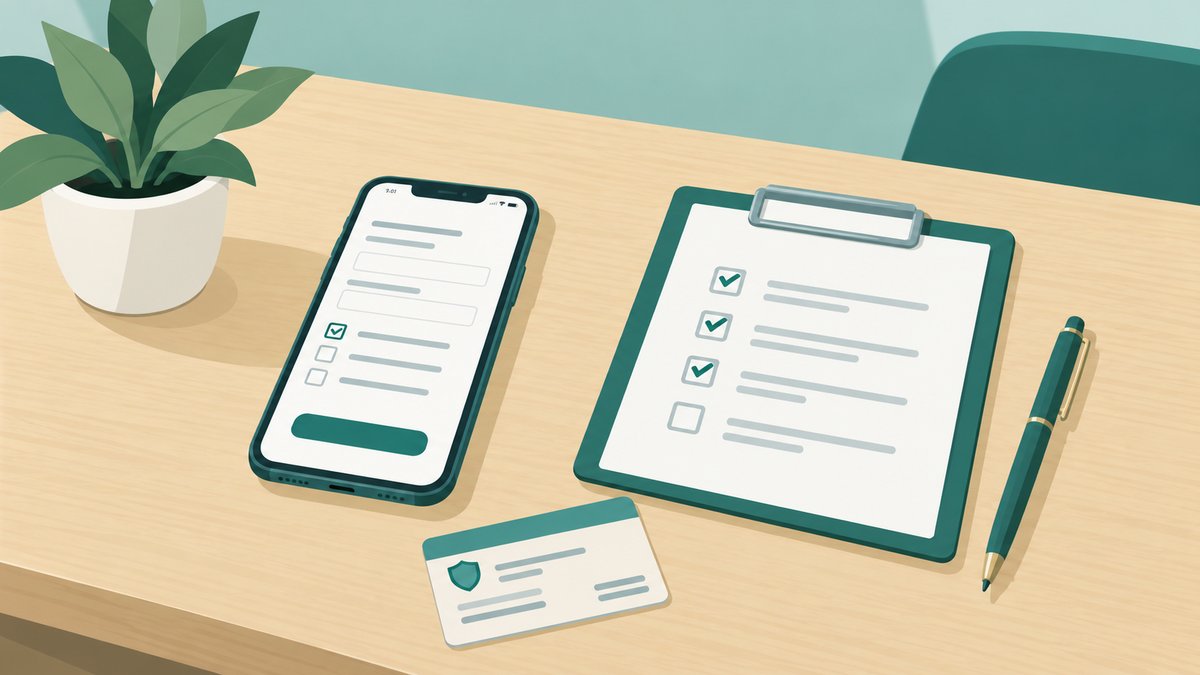
A starting list. Collect the card at booking, as part of new patient intake, then check it again before each visit.
Coverage check · two or three business days before the visit
Every practice
· A photo of the front and back of the card, and the policyholder's name, date of birth and relationship to the patient
· The plan is active on the date of the visit
· The clinician is in network for this plan
· What the patient will owe for this type of visit: copay, coinsurance, and how much of the deductible is left
· Whether a referral or prior authorization is needed, and whether it is on file
· Any second insurance, and which plan pays first
Medicare and Medicaid
· Original Medicare or a Medicare Advantage plan, and the card that matches
· For Medicaid, the plan's name if the patient is in a managed care plan
Therapy practices, also
· Whether mental health benefits are handled by a separate company (check the back of the card for a behavioral health number)
· Any limit on the number of sessions a year, and how many are used
· Whether telehealth sessions are covered the same way as in-person
How the check works, and what the rules say
The electronic eligibility check
Under HIPAA, the eligibility transaction is an inquiry from a provider to a health plan about a patient's eligibility, coverage and benefits, and the plan's response.1 The standard for it is the X12 270/271 health care eligibility benefit inquiry and response.2 Many practice management systems and clearinghouses send the 270 and read the 271 for you, which is what makes checking every visit, rather than only new patients, realistic.
For Medicare, CMS runs the HIPAA Eligibility Transaction System (HETS), which returns Medicare eligibility in real time through the same 270/271 exchange.3
The Medicare card mix-up
Medicare.gov tells people with Original Medicare to show their Medicare card when they get services, and tells people in a Medicare Advantage plan to use their plan's card instead.4 A patient who hands over their Medicare card out of habit, when they are now in a Medicare Advantage plan, is a claim sent to the wrong payer. Ask which card they will use, and check it.
Prior authorization in 2026
Under CMS's interoperability and prior authorization rule, Medicare Advantage organizations, Medicaid and CHIP fee-for-service programs and Medicaid and CHIP managed care plans must send prior authorization decisions within 72 hours for urgent requests and seven calendar days for standard ones, and from 2026 they must give a specific reason for a denial.5 For the front desk, that means a request for a visit next week should go in now, and a denial comes with something you can act on.
Patients without coverage
For patients who are uninsured or paying themselves, the No Surprises Act rules ask the provider to find that out at scheduling and give a good faith estimate on a set timeline.6 The timeline and a message to send are in our new patient intake checklist.

Veterinary practices: a different job
Pet insurance usually works the other way round. AAHA explains that the owner typically pays the bill at the visit, unless the insurer offers to pay the clinic directly, keeps the invoices, receipts and medical records, and submits the claim to the insurer.7 So a vet clinic usually has no coverage to check before a visit. Its part is an itemized invoice and the records the owner needs for the claim, sent without the owner having to ask. Reminders for the visit itself are in our vet reminder templates.
Messages you can copy
Replace the words in brackets. Send the card request at booking, and the cost message once the check is done.
Card request · text, right after booking
[Practice]: you're booked with [Clinician] on [day, date] at [time]. Please send a photo of the front and back of your insurance card here, or upload it with your forms: [link]. If you have Medicare, send the card you use for your plan. Reply STOP to opt out.
What you will owe · text or email, after the coverage check
[Practice]: we checked your coverage for [day]'s visit. Your plan shows a [copay of $X / coinsurance of X%], and $[amount] left on your deductible. Questions? Call [phone].
A coverage problem · phone first, then this text
[Practice]: we couldn't confirm your insurance for [day] at [time]: [the plan shows as inactive / we need a referral from your doctor]. Please call us at [phone] before your visit so we can sort it out together.
Veterinary version · email, after the visit, to owners with pet insurance
Hello [Owner], thank you for bringing [Pet] in today. Your itemized invoice and today's medical records are attached for your pet insurance claim. If your insurer needs anything else from us, reply to this email.
What patients will owe is also part of the conversation about missed visits. Our no-show policy and late-cancellation policy articles cover the policies to send with it.
What can run by itself
- The eligibility check, sent for every appointment two or three business days ahead.
- A list for the front desk each morning: coverage confirmed, coverage that needs a call, and referrals or authorizations that are missing.
- The card request at booking, and a reminder only to patients who have not sent it.
- The cost message to the patient once the check is back.
What stays with people
- Calling the payer. When the response is unclear, or a benefit depends on details the electronic check does not show.
- Prior authorization requests. Someone who knows the clinical details prepares and follows each one.
- Explaining costs. A patient worried about a bill needs a person, not a text.
Count it first
For one month, note every claim denied or returned for an eligibility reason: inactive plan, wrong payer, out of network, missing referral. That count is the case for checking every visit, and the number to compare afterwards. It sits alongside the four jobs in our front-desk automation article, and more of what we set up is on our page for practices.
Questions practices ask
How often should a practice verify insurance?
Before every visit, not only the first one. Plans end, patients change jobs and deductibles reset, so a check two or three business days ahead catches changes while there is time to act.
What is a 270/271 eligibility check?
It is the HIPAA standard electronic inquiry a provider sends a health plan (the 270) and the plan's response with eligibility, coverage and benefit details (the 271). Many practice systems and clearinghouses can send it automatically.
Which card should a Medicare Advantage patient show?
Their Medicare Advantage plan's card. Medicare.gov tells people in a Medicare Advantage plan to use their plan's card to get services, not their Medicare card.
How long do Medicare Advantage plans have to decide on prior authorization?
Under CMS's rule, 72 hours for urgent requests and seven calendar days for standard requests. The same timeframes apply to Medicaid and CHIP fee-for-service programs and managed care plans.
Sources
- Code of Federal Regulations, 45 CFR 162.1201, Eligibility for a health plan transaction.
- Code of Federal Regulations, 45 CFR 162.1202, Standards for eligibility for a health plan transaction.
- Centers for Medicare & Medicaid Services, HIPAA Eligibility Transaction System (HETS).
- Medicare.gov, Your Medicare card.
- Centers for Medicare & Medicaid Services, CMS Interoperability and Prior Authorization Final Rule (CMS-0057-F) fact sheet.
- Code of Federal Regulations, 45 CFR 149.610, good faith estimates for uninsured (or self-pay) individuals.
- American Animal Hospital Association, How does pet insurance work?
About the author
Ayush Gondley founded Gondley Consulting, which automates front-desk work for small US medical, therapy and veterinary practices. Before that he was a marine engineer at Maersk, keeping complex systems running at sea. Gondley Consulting on LinkedIn