Gondley Consulting
Before and after surgery: the fasting instructions and messages a vet clinic sends

Ayush Gondley · 11 November 2026 · 7 min read
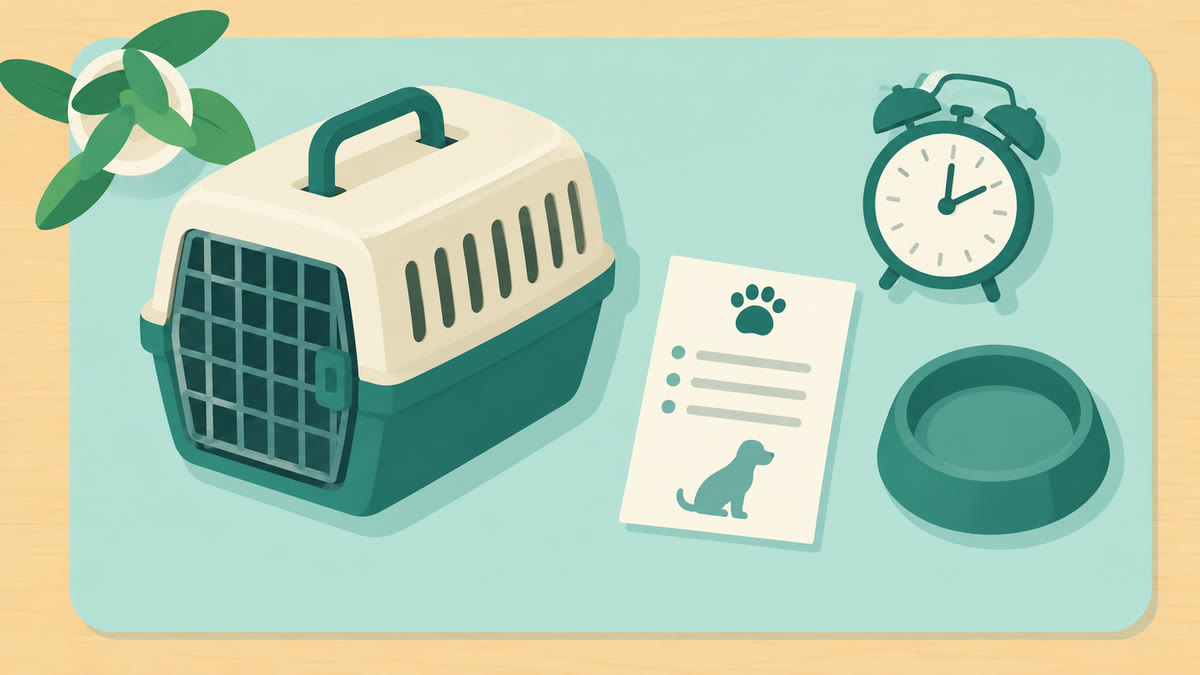
Most of a surgery day happens at home: the fast, the medicines, the drive in, and the first night back.
Key takeaways
- AAHA's 2020 anesthesia guidelines say anesthesia begins at home, with the client fasting the pet and giving medicines as the clinic directs. The client can only do that if the instructions reach them in time and in plain words.
- The recommended fast for healthy adult dogs and cats is shorter than the old "nothing after midnight": food is withheld for 4 to 6 hours, and water is not withheld. Very young or very small pets, diabetic pets and pets at risk of regurgitation each have their own times.
- Our recommendation is six messages around one surgery: when it is booked, two days before, the evening before, on the day, at pick-up, and the next day. Each one names the time or the action, not just the date.
- AAHA also advises explaining the procedure and its risks before getting written consent, and sending clients home with anesthetic discharge instructions as well as the surgical ones, including when to call.
When a pet arrives for surgery having eaten breakfast, or without its usual heart medicine, or without the signed consent form, the day starts late or the surgery is put off. Usually nobody did anything wrong. The client heard the instructions once at the front desk, a week earlier, and remembered half of them. A few short messages at the right moments fix most of it.
The messages around one surgery
Our recommendation is six touches, each with one job:
- When it is booked: the date, the drop-off time, the estimate and the consent form, so the client can read them at home.
- Two days before: the food, water and medicine instructions for this pet, with the times written out.
- The evening before: a short reminder of the food cut-off and the drop-off time.
- On the day: a text or call when the pet is out of surgery, and the pick-up time.
- At pick-up: the discharge instructions in writing, as well as spoken.
- The next day: a check-in, and later a reminder for the recheck the vet set.
The same reminder routine as in our vet appointment reminders guide carries most of this. What changes for surgery is the content: times, food and medicines.
Fasting: what AAHA's guidelines say
The 2020 AAHA Anesthesia and Monitoring Guidelines for Dogs and Cats note that the recommended fast for healthy adult patients has become shorter, based on clinical experience and evidence including a lower rate of gastroesophageal reflux with shorter fasts.1 Their table gives these times:2
- Healthy pets: water is not withheld; food is withheld for 4 to 6 hours; usual oral medicines are given.
- Under 8 weeks old or under 2 kg: water is not withheld; food is withheld for no longer than 1 to 2 hours, with a little wet food in the pre-op period; done as the first case of the day.
- Diabetic pets: water is not withheld; food is withheld for 2 to 4 hours, with half a meal 2 to 4 hours before; half the insulin dose 2 to 4 hours before; done as the first case of the day.
- History of, or at risk of, regurgitation: water and food are withheld for 6 to 12 hours, and the vet may consider feeding 10% to 25% of the normal amount 4 to 6 hours before.
Oral medicines can be given with a small amount of wet food, 1 to 2 tablespoons.2 AAHA adds that most medicines should be continued on the day, with exceptions, especially some heart medicines.1 The vet decides each pet's instructions; AAHA presents its table as a guideline, not a standard of care. What the message needs is the vet's decision turned into clock times: "no food after 4 a.m.", not "fast for 4 to 6 hours".
The estimate and the consent form
AAHA's guidelines say the conversation with the client should include a full description of the anesthetic procedure and its possible risks before written consent is obtained.1 They also note that clients worried about anesthesia sometimes put off procedures like dental cleanings, and that explaining the whole process helps. Our recommendation is to send the estimate and the consent form when the surgery is booked, so the client reads them at home and brings questions, rather than seeing them for the first time at 7:30 in the morning. Keep the client's phone number and email current, as in our intake checklist.
After surgery: the discharge instructions
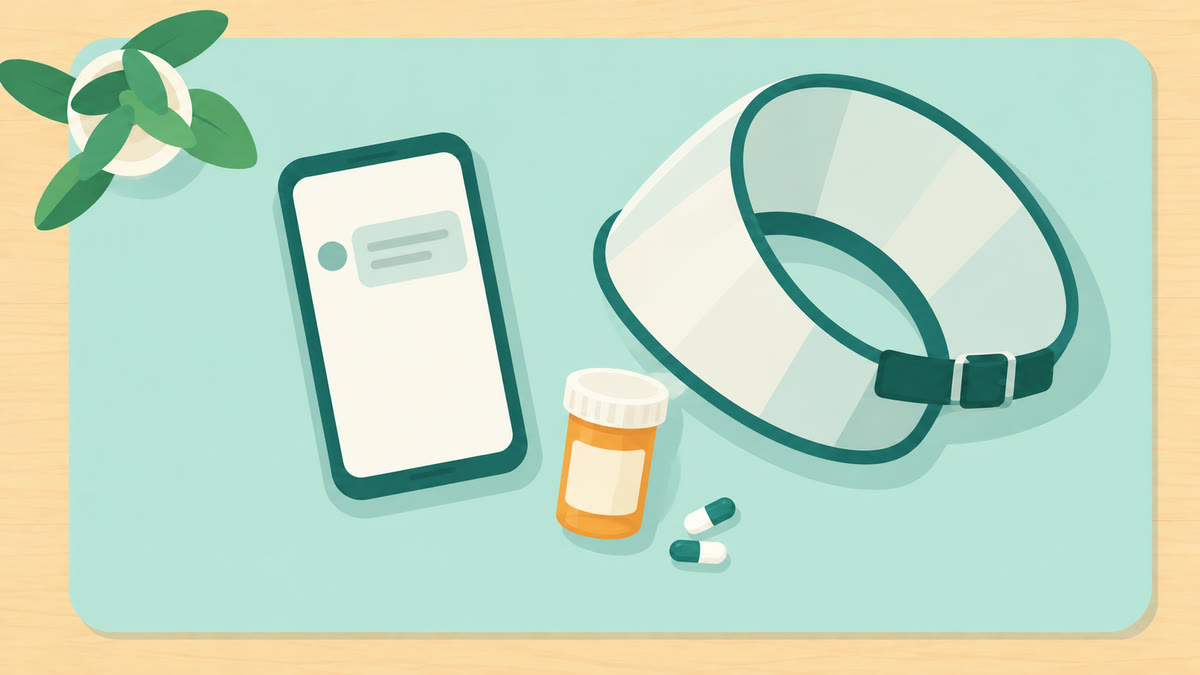
AAHA suggests that clients receive anesthetic discharge instructions as well as the surgical discharge form, covering possible complications and when to contact the clinic.1 Its example says pets may be sleepy for the first 12 to 24 hours but should wake easily, may eat less for 12 to 24 hours, and may have a slight cough for 1 to 2 days from the breathing tube. It tells clients to call if:1
- the pet's appetite or activity is not back to normal within 24 hours;
- the cough is moist, getting worse or bringing anything up;
- the pet's behavior changes in a way that worries them.
A client who is handed a pet, a cone and three medicines at the pick-up desk will not remember all of it. Send the same instructions by text or email as they leave, with the clinic's number and the after-hours number.
Texting clients
Under the FCC's rules, a client can withdraw consent to automated texts in any reasonable way, including by replying "stop", and the request must be honored within ten business days.3 Our recommendation is to keep surgery texts to the client's own pet and appointment, add "Reply STOP to opt out" to the automated ones, and send everything by email as well for clients who prefer it. Holiday and other general messages are a different case, covered in our holiday pet safety guide.
Messages you can copy
Replace the words in brackets. The times in each message are the ones your vet set for this pet.
When it is booked · the email
Subject: [Pet]'s surgery on [day, date]
Hello [Name],
[Pet] is booked for [procedure] on [day, date]. Please bring [Pet] in at [drop-off time]. We expect [Pet] to go home in the [afternoon/evening], and we will call you when [Pet] is ready.
Attached are the estimate and the consent form. Please read them before the day, and call us with any questions. Two days before, we will send you the food and medicine instructions for [Pet].
[Clinic], [phone]
Two days before · the text
Hi [Name], [Clinic] here. [Pet]'s surgery is [day], drop-off [time]. No food after [time]. Water is fine. Give usual medicines unless we said otherwise. Reply STOP to opt out.
The evening before · the text
Hi [Name], a reminder from [Clinic]: no food for [Pet] after [time]. Water is fine. See you at [drop-off time] tomorrow. Reply STOP to opt out.
On the day · the update
Hi [Name], [Pet] is out of surgery and waking up well. We'll call you by [time] to arrange pick-up. [Clinic]
At pick-up · the home-care message
Hi [Name], [Pet]'s home-care instructions are here: [link]. [Pet] may be sleepy and eat less for a day. Call us on [number] if [Pet] is not eating or moving normally within 24 hours, or if anything worries you. After hours: [number].
The next day · the check-in
Hi [Name], [Clinic] here. How is [Pet] today? Reply here or call [number] if anything worries you. [Pet]'s recheck is on [date].
What can run by itself
- The booking email with the estimate and consent form, sent when the surgery is put in the schedule.
- The two-day and evening texts, filled with the times the vet set for this pet.
- The home-care message, sent when the pet is checked out, with the right instructions for the procedure.
- The next-day check-in and the recheck reminder, on their dates, as in our front desk automation guide.
What stays with your team
- The instructions for each pet: the fasting times and which medicines to give or hold, set by the vet.
- The consent conversation: the procedure, the risks and the client's questions.
- The call when something is off: a pet not eating the next day, or a client who sounds worried. A missed surgery slot can still go to your waitlist.
More of what we write for practices is on the blog.
Questions clinics ask
How long should a dog or cat fast before surgery?
For healthy pets, AAHA's 2020 guidelines give 4 to 6 hours without food, with water not withheld. Very young or very small pets, diabetic pets and pets at risk of regurgitation have different times, and the vet sets each pet's instructions.
Should pets have water before surgery?
For healthy pets, AAHA's table does not withhold water. For pets with a history of, or at risk of, regurgitation, it withholds water for 6 to 12 hours.
Should a pet get its usual medicine on the day of surgery?
AAHA says most medicines should be continued on the day, with exceptions, especially some heart medicines. The vet decides for each pet, and the message should say which ones.
When should a clinic send pre-surgery instructions?
Our recommendation is two days before, with a short reminder the evening before, so the client has time to ask questions and plan the morning.
What should discharge instructions after anesthesia include?
What is normal for the first day or two, such as sleepiness, a smaller appetite and a slight cough, and when to call: appetite or activity not back within 24 hours, a cough that gets worse, or a change in behavior.
Sources
- Grubb T, Sager J, Gaynor JS, et al., 2020 AAHA Anesthesia and Monitoring Guidelines for Dogs and Cats (PDF), Journal of the American Animal Hospital Association, 2020; 56. Phase 1, Step 2; Phase 2, Step 1; Phase 3.
- American Animal Hospital Association, Fasting and Treatment Recommendations for Dogs and Cats Prior to Anesthesia (PDF), 2020.
- Code of Federal Regulations, 47 CFR 64.1200(a)(10) to (a)(12), revocation of consent: eCFR, 47 CFR 64.1200.
About the author
Ayush Gondley founded Gondley Consulting, which automates front-desk work for small US medical, therapy and veterinary practices. Before that he was a marine engineer at Maersk, keeping complex systems running at sea. Gondley Consulting on LinkedIn