Gondley Consulting
Fee reminders to clients: WhatsApp message templates for CA firms

Ayush Gondley · 9 October 2026 · 5 min read
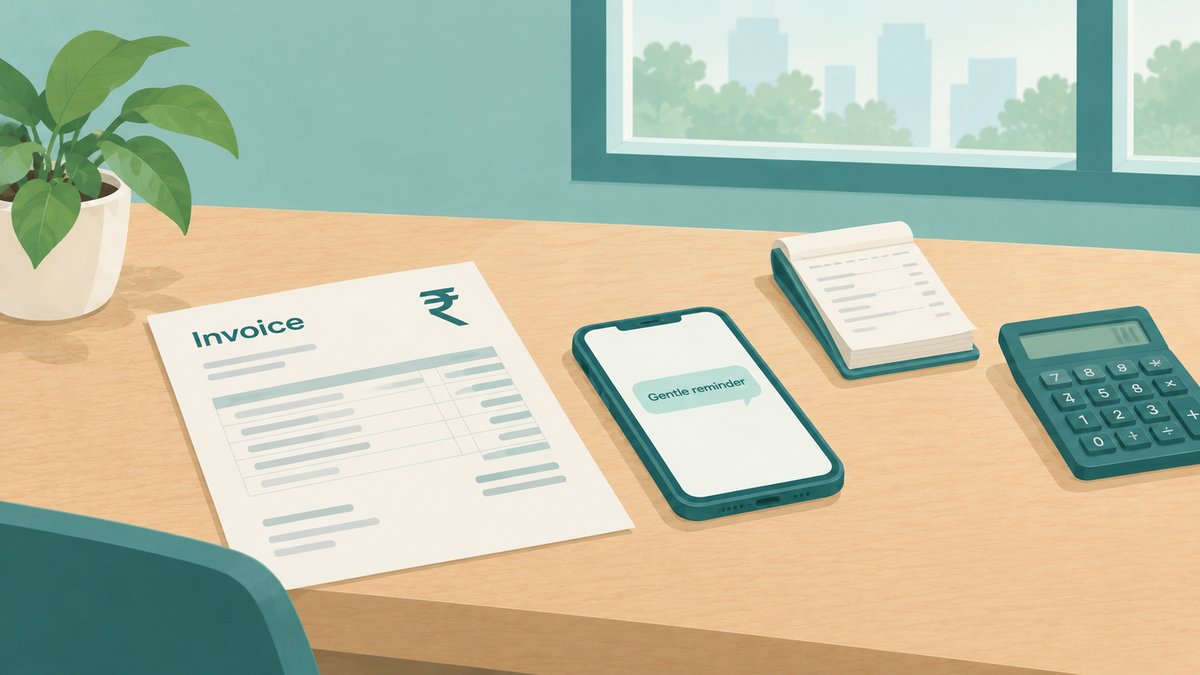
Agreed terms at the start make every later reminder a routine message, not an awkward one.
Key takeaways
- Fee follow-up is easiest when the terms are agreed at onboarding: the fee, when it is billed, when it is due and how to pay.
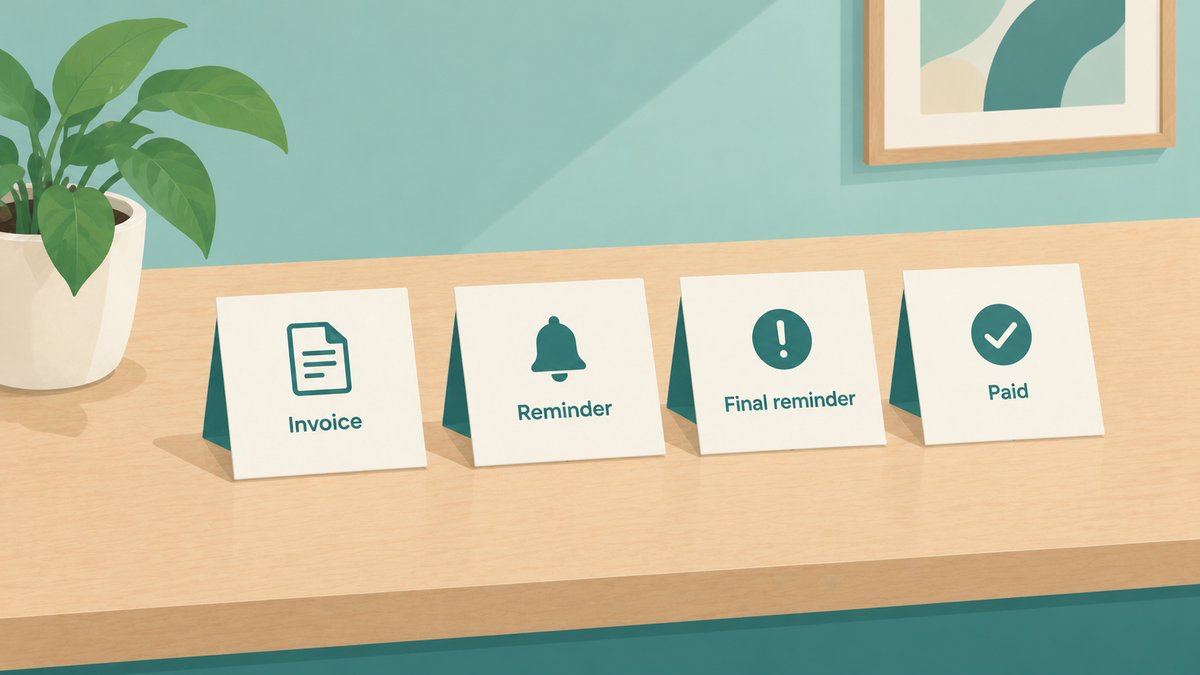
- Four messages cover most of it: the invoice note, a gentle reminder, a firmer reminder and a thank-you once paid.
- A WhatsApp broadcast sends the same words to everyone and reaches only clients who have saved your number, so fee reminders, which carry each client's own amount, go one by one.
- Reminders that stop once a fee is paid can run by themselves. A client in difficulty, and any decision to pause work, stay with the partner.
Most fee follow-up at a CA firm comes down to four messages: a note when the invoice goes out, a gentle reminder, a firmer one, and a thank-you once the fee is paid. With the terms agreed at onboarding and the messages written once, nobody at the office has to decide each month how to ask a client for money.
Agree the terms at onboarding
Our recommendation: put four things in the engagement letter, and repeat them on every invoice.
- The fee and what it covers, for example a monthly retainer for GST and TDS, or a fee per return.
- When it is billed, for example on the 1st of every month or when a return is filed.
- When it is due, for example within 15 days of the invoice.
- How to pay: your bank details or UPI ID, and who at the office to contact about fees.
Ask at the same time whether the client agrees to receive reminders on WhatsApp, and note the number they want them on.
When to send each one
These timings are our recommendation. Adjust them to your firm's terms.
- Invoice note: the day the invoice goes out.
- Gentle reminder: a few days after the due date, if it is still unpaid.
- Firmer reminder: about two weeks after the due date.
- Thank-you: the day the payment arrives.
Send fee messages separately from document requests, so that each message asks the client for one thing. The document side has its own messages in our GST reminder templates.
Templates you can copy
Replace the words in brackets. Write them in English or Hindi, whichever your clients use.
Invoice note · the day the invoice goes out
Namaste [Name] ji, this is [Firm]. Our invoice [number] for [period / work] is attached: ₹[amount], due by [date]. You can pay by bank transfer or UPI to [details]. Thank you.
Gentle reminder · a few days after the due date
Namaste [Name] ji, a gentle reminder from [Firm] that invoice [number] for ₹[amount] was due on [date]. If you have already paid, please ignore this message, or share the payment reference so we can match it.
Firmer reminder · about two weeks after the due date
Namaste [Name] ji, invoice [number] for ₹[amount] from [Firm] is now [number] days overdue. Please arrange payment by [date], or call [partner] on [phone] if there is anything we should discuss.
Thank-you · the day the payment arrives
Namaste [Name] ji, we have received ₹[amount] against invoice [number]. Thank you. [If you have deducted TDS on our fees, please share the TDS certificate when it is issued.]
Keep every reminder to the facts: the invoice, the amount, the date and how to pay. No warnings in the first two. If a fee is still unpaid after the firmer reminder, the next step is a call from the partner, not another message.
Sending them on WhatsApp
One by one, not as a broadcast. A broadcast list sends the same words to everyone on it, and WhatsApp says only contacts who have added your number to their phone's address book receive a broadcast.1 Fee reminders carry each client's own invoice and amount, so they go to each client individually.
Permission comes first. WhatsApp's Business Messaging Policy says a business may contact people only if they have given it their number and have agreed to receive messages from it, and that it must respect any request to stop.2 That is why the onboarding step above asks for the client's agreement.
What can run by itself
- The invoice note, sent with the invoice.
- Reminders that go only to clients whose invoices are still unpaid, and stop the moment a payment is recorded.
- The thank-you, once the payment is matched.
- A weekly list for the partner of what is overdue and by how long.
What stays with the partner
- The call. Speaking to a client whose fee is still unpaid after the firmer reminder.
- Hardship. Agreeing a payment plan or a reduced fee for a client going through a difficult time.
- Pausing work. Whether to hold further work for a client who has not paid is a judgment for the partner, not a rule for a system.
Count it first
Make a list of every invoice more than 30 days overdue today, and count how many fee reminders and calls your team made last month. That shows what the chasing costs, and gives you a number to compare once the reminders run by themselves.
Questions CAs ask
How should a CA firm remind a client about pending fees?
Our recommendation is a short, factual message with the invoice number, the amount, the due date and how to pay, sent a few days after the due date, then a firmer one about two weeks later, and a call from the partner after that.
Can we send fee reminders to all clients at once on WhatsApp?
Not usefully. A broadcast sends the same words to everyone and reaches only clients who have saved your number, while each fee reminder carries that client's own amount. Send them one by one.
Do we need a client's permission to send fee reminders on WhatsApp?
WhatsApp's Business Messaging Policy says a business may contact people only if they have given it their number and agreed to receive messages from it. Ask for that agreement at onboarding.
What should go in the engagement letter about fees?
The fee and what it covers, when it is billed, when it is due, and how to pay, plus the client's agreement to receive reminders on WhatsApp.
Sources
- WhatsApp Help Center: How to use broadcast lists on the WhatsApp Business app.
- WhatsApp Business Messaging Policy, last updated 23 September 2026: business.whatsapp.com/policy.
About the author
Ayush Gondley founded Gondley Consulting, which builds automation for CA practices in India: client documents before deadlines, compliance calendars, fee reminders and onboarding. Before that he was a marine engineer at Maersk, keeping complex systems running at sea. He is based in Indore. Gondley Consulting on LinkedIn